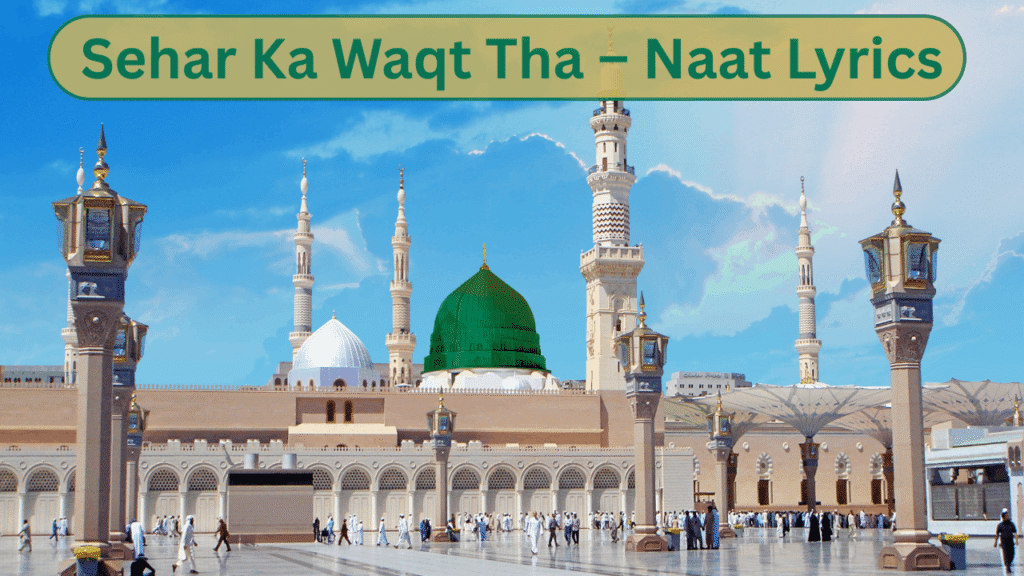
Sehar Ka Waqt Tha Naat Lyrics
Sehar ka waqt tha masoom kaliyan muskura rahi thin
Hawain khair-e-maqdam ke tarane gunguna rahi thin
Sehar ka waqt tha masoom kaliyan muskura rahi thin
Hawain khair-e-maqdam ke tarane gunguna rahi thin
Abhi Jibraeel bhi aaye na thay Kaabe ke mimbar se
Ke itne mein sada aayi hai Abdullah ke ghar se
Mubarak ho Shah-e-Do Sara tashreef le aaye
Mubarak ho Muhammad Mustafa ﷺ tashreef le aaye
Woh Muhammad ﷺ fakhr-e-aalam, badshah-e-ins-o-jaan ﷺ
Syed-ul-Mursaleen ﷺ, Sultan-e-Arab, Shah-e-Umam ﷺ
Ek din Jibraeel se kehne lage Shah-e-Umam ﷺ
Tum ne dekhe hain jahan, batao to kaise hain hum ﷺ?
Arz ki Jibraeel ne, aye Shah-e-Deen ﷺ, aye Khatam-ur-Rasul ﷺ
Aap ﷺ ka koi hum-misal hi nahi, Rab ki qasam
Na koi aap ﷺ sa hoga, na koi aap ﷺ jaisa tha
Koi Yousuf se pooche Mustafa ﷺ ka husn kaisa tha
Zameen o aasman mein koi bhi misaal na mili
Durood un ﷺ par, salaam un ﷺ par, yahi kehna Khuda ka hai
Khuda ke baad jo hai martaba “Salli Ala” ka hi
Wohi Sardar-e-Aalam hain, wohi Mukhtar-e-Ummat hain
Wohi ﷺ to Hashr ke maidan mein sab ki shafaat hain
Shafaat ke liye sab ki nazar un ﷺ par lagi hogi
Do mehboob ﷺ se barh kar guzara ho nahi sakta
Yeh woh dar hai ke jis dar se kinara ho nahi sakta
Qasam Allah ki logo! mera iman kehta hai
Nabi ﷺ ka naam liya na sahara ho nahi sakta
Nabi ﷺ ke chahne walon ke dil mein woh muhabbat hai
Nabi ﷺ ke zikr mein meri aankhon se behna ruk nahi sakta
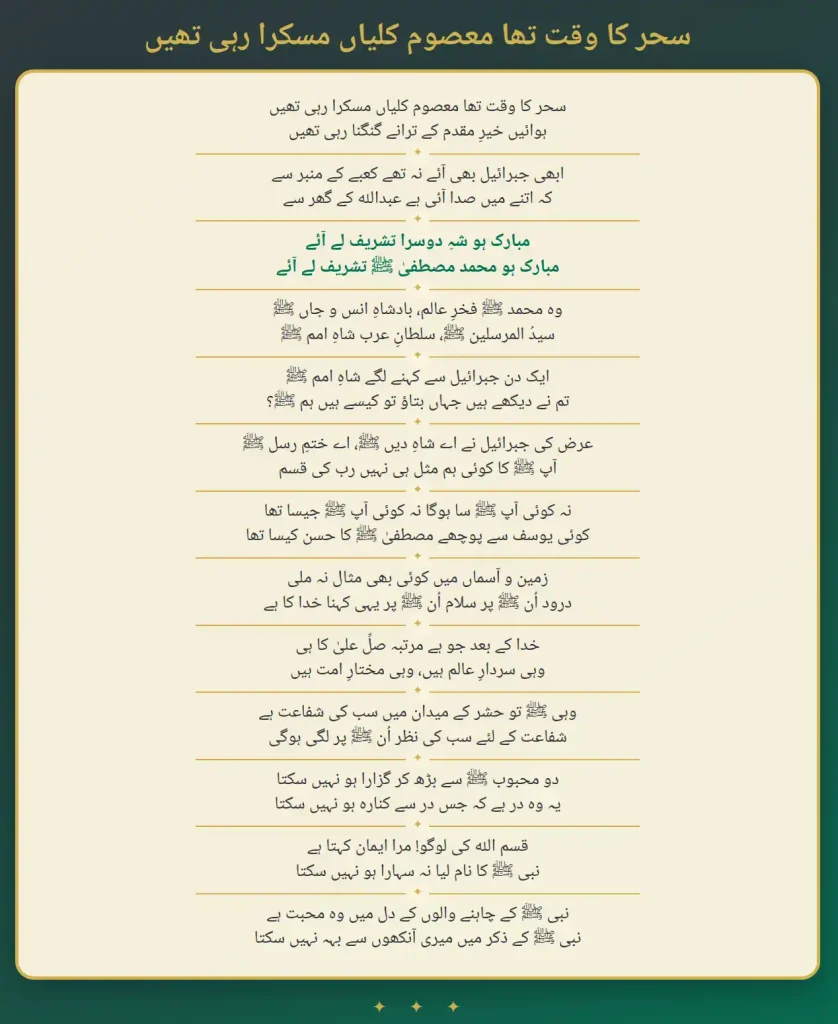
سحر کا وقت تھا معصوم کلیاں مسکرا رہی تھیں
ہوائیں خیرِ مقدم کے ترانے گنگنا رہی تھیں
ابھی جبرائیل بھی آئے نہ تھے کعبے کے منبر سے
کہ اتنے میں صدا آئی ہے عبداللہ کے گھر سے
مبارک ہو شہِ دوسرا تشریف لے آئے
مبارک ہو محمد مصطفیٰ ﷺ تشریف لے آئے
وہ محمد ﷺ فخرِ عالم، بادشاہِ انس و جاں ﷺ
سیدُ المرسلین ﷺ، سلطانِ عرب شاہِ امم ﷺ
ایک دن جبرائیل سے کہنے لگے شاہِ امم ﷺ
تم نے دیکھے ہیں جہاں بتاؤ تو کیسے ہیں ہم ﷺ؟
عرض کی جبرائیل نے اے شاہِ دیں ﷺ، اے ختمِ رسل ﷺ
آپ ﷺ کا کوئی ہم مثل ہی نہیں رب کی قسم
نہ کوئی آپ ﷺ سا ہوگا نہ کوئی آپ ﷺ جیسا تھا
کوئی یوسف سے پوچھے مصطفیٰ ﷺ کا حسن کیسا تھا
زمین و آسماں میں کوئی بھی مثال نہ ملی
درود اُن ﷺ پر سلام اُن ﷺ پر یہی کہنا خدا کا ہے
خدا کے بعد جو ہے مرتبہ صلِّ علیٰ کا ہی
وہی سردارِ عالم ہیں، وہی مختارِ امت ہیں
وہی ﷺ تو حشر کے میدان میں سب کی شفاعت ہے
شفاعت کے لئے سب کی نظر اُن ﷺ پر لگی ہوگی
دو محبوب ﷺ سے بڑھ کر گزارا ہو نہیں سکتا
یہ وہ در ہے کہ جس در سے کنارہ ہو نہیں سکتا
قسم اللہ کی لوگو! مرا ایمان کہتا ہے
نبی ﷺ کا نام لیا نہ سہارا ہو نہیں سکتا
نبی ﷺ کے چاہنے والوں کے دل میں وہ محبت ہے
نبی ﷺ کے ذکر میں میری آنکھوں سے بہہ نہیں سکتا

اگر آپ چاہتے ہیں کہ کسی خاص نعت کے مکمل اشعار ہماری ویب سائٹ پر شامل کیے جائیں تو آپ ہم سے واٹس ایپ کے ذریعے رابطہ کر سکتے ہیں یا ہمیں ای میل بھیج سکتے ہیں۔
Sehar Ka Waqt Tha Naat - Meaning, Background & Significance
Sehar ka waqt tha, masoom kaliyan muskura rahi thin…
This beautiful Naat has become a beloved part of Mehfil-e-Naat gatherings across Pakistan and beyond. Its opening imagery paints a spiritual dawn — a moment filled with light, fragrance and divine announcement. The Naat describes the blessed arrival and unmatched status of Prophet Muhammad ﷺ, using poetic symbolism rooted in classical South Asian devotional tradition.
In this detailed guide, you will find:
- Background of the Naat
- Authenticity of the poet
- Meaning and thematic explanation
- Why it is famous
- Its spiritual significance
- Frequently asked questions
This article is written to provide authentic, structured, and valuable information for readers seeking both understanding and reference.
Who Wrote “Sehar Ka Waqt Tha”?
One of the most common questions is about the poet of this Naat.
After reviewing available Naat collections, publications, and recorded attributions, the original poet of “Sehar Ka Waqt Tha Masoom Kaliyan Muskura Rahi Thin” is not definitively authenticated in classical Naat records.
In many sources, the poet is either:
- Not mentioned
- Attributed inconsistently
- Listed as traditional
For accuracy and credibility, it is best described as:
Poet: Not Authenticated / Traditional Naat
Avoiding incorrect attribution is important for maintaining scholarly and religious integrity.
Theme of Sehar Ka Waqt Tha Naat
This Naat revolves around five major themes:
- The Blessed Birth of Prophet Muhammad ﷺ
- Divine Announcement
- Unmatched Status of Prophet ﷺ
- Comparison with Prophet Yusuf (AS)
- Shafaat (Intercession)
1. The Blessed Birth of Prophet Muhammad ﷺ
The opening lines describe a spiritual dawn:
Sehar ka waqt tha, masoom kaliyan muskura rahi thin
Hawain khair-e-maqdam ke tarane gunguna rahi thin
The imagery suggests:
- Nature celebrating
- The universe welcoming
- A divine moment unfolding
In classical Naat tradition, nature often symbolizes spiritual joy at the Prophet’s birth.
2. Divine Announcement
The Naat describes a heavenly proclamation from the house of Abdullah:
Mubarak ho Shah-e-Do Sara tashreef le aaye
Mubarak ho Muhammad Mustafa ﷺ tashreef le aaye
This reflects a traditional Milad narrative style where angels and creation celebrate the arrival of the final Messenger.
3. Unmatched Status of Prophet ﷺ
The Naat highlights:
- Fakhr-e-Aalam (Pride of the Universe)
- Syed-ul-Mursaleen (Leader of the Messengers)
- Sultan-e-Arab
- Shah-e-Umam
It reinforces the Islamic belief that Prophet Muhammad ﷺ holds the highest rank among creation.
4. Comparison with Prophet Yusuf (AS)
One powerful poetic line says:
Koi Yousuf se pooche Mustafa ﷺ ka husn kaisa tha
In Islamic tradition, Prophet Yusuf (AS) is known for extraordinary beauty. The comparison suggests that even that beauty is surpassed by the spiritual and luminous beauty of Prophet Muhammad ﷺ.
This is a symbolic expression of reverence — not literal comparison.
5. Shafaat (Intercession)
The Naat also refers to the Day of Judgment:
Wohi to Hashr ke maidan mein sab ki shafaat hain
This refers to the Islamic belief that Prophet Muhammad ﷺ will intercede for the Ummah on the Day of Resurrection.
This theological reference adds depth and spiritual meaning to the Naat.
Literary Style and Symbolism
This Naat follows a traditional South Asian Naat structure, featuring:
- Nature imagery (dawn, flowers, breeze)
- Angelic presence (Jibraeel AS)
- Cosmic celebration
- Emotional devotion
- Rhythmic repetition
The style blends Urdu and Persian spiritual vocabulary with simple emotional expression, making it accessible and powerful.
Why Is This Naat So Popular?
Although the poet is not clearly authenticated, the Naat became widely popular due to its recitation by prominent Naat Khawans.
It gained massive exposure through recordings in:
- Milad gatherings
- Islamic television programs
- School events
- Religious conferences
The combination of emotional lyrics and powerful delivery made it memorable and widely shared.
Spiritual Significance
The Naat encourages:
- Love for Prophet Muhammad ﷺ
- Reflection on his status
- Strengthening faith
- Emotional connection
The repeated references to his unmatched rank remind believers of:
- Finality of Prophethood
- Divine selection
- Mercy for mankind
It also instills hope through the concept of Shafaat.
Connection with Milad Traditions
This Naat is especially associated with:
- Eid Milad-un-Nabi ﷺ
- Jashn-e-Wiladat gatherings
- Mehfil-e-Naat
Its opening lines about dawn symbolically align with the concept of Noor (Divine Light), often discussed in Milad literature.
In South Asian devotional culture, such Naats help build spiritual atmosphere during gatherings.
Frequently Asked Questions
Who wrote Sehar Ka Waqt Tha Naat?
What is the theme of Sehar Ka Waqt Tha?
When is this Naat recited?
Does this Naat mention Shafaat?
Why is Prophet Yusuf mentioned in the Naat?
Other Post
Aj Sik Mitran Di Naat Lyrics
Aj Sik Mitran Di Naat Lyrics Pir Mehr Ali Shah (RA) holds a distinguished place in South Asian…
Hum Ne Ankhon Se Dekha Nahi Hai Magar Naat Lyrics
Hum Ne Ankhon Se Dekha Nahi Hai Magar Naat Lyrics This Naat celebrates the love for Prophet Muhammad…
Har Waqt Tasawwur Mein Naat Lyrics
Har Waqt Tasawwur Mein Naat Lyrics The naat delivers a message of hope, loyalty, humility, and deep spiritual…