Mustafa Jan E Rehmat Naat Lyrics
☪ Naat Sharif · Urdu Poetry Mustafa Jan-e-Rehmat Pe Lakhon Salam Meaning, History & Why Every Pakistani Loves…
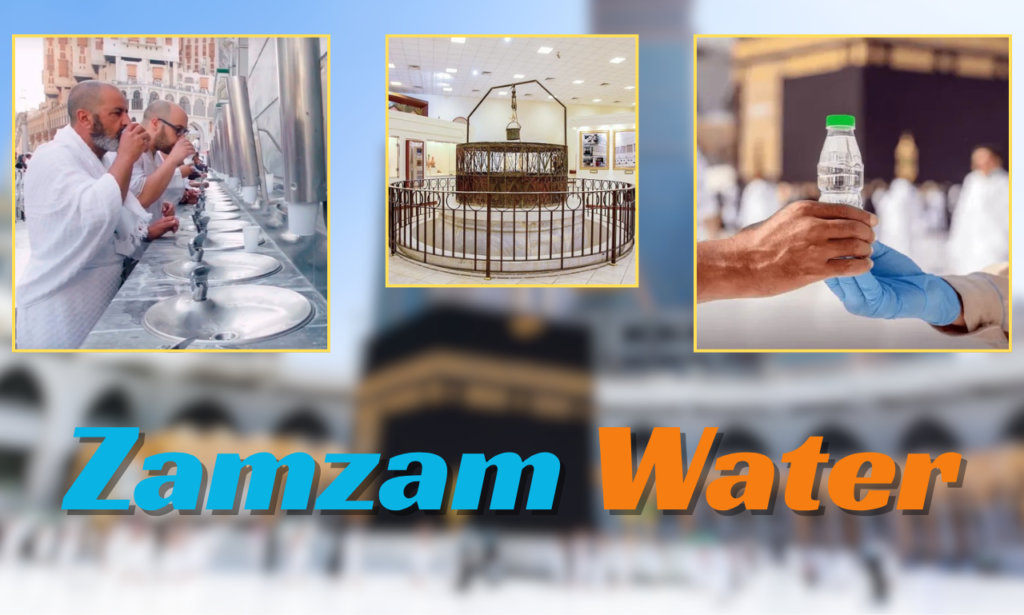
Zamzam Water is not ordinary water. For Muslims, it carries history, emotion, faith, and deep spiritual value. It comes from the blessed well of Zamzam in Makkah, near the Holy Kaaba, and holds a special place in the hearts of millions across the world. In Pakistan, the words Zamzam Water instantly connect with Hajj, Umrah, duas, blessings, and memories brought home by loved ones. People do not see it as just water. They see it as a gift, a trust, and a symbol of mercy from Allah.
When someone returns from Saudi Arabia and brings Zamzam Water, families receive it with respect. Small cups are shared. Prayers are made. Children are told why this water matters. Elders drink it with gratitude. This reaction is not cultural hype. It comes from the strong Islamic significance attached to Zamzam Water for centuries.
This guide explains what Zamzam Water is, where it comes from, why it is important in Islam, what makes it different, how Muslims use it, and why its value remains unmatched. Whether you are searching for religious knowledge, practical use, or authentic reader-friendly content, this article covers the topic in a clear and complete way.
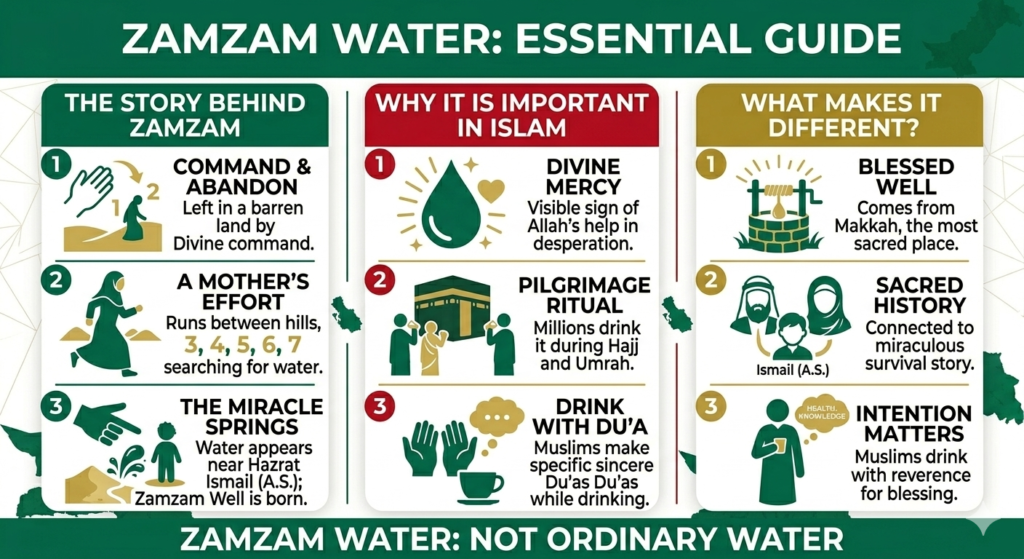
Zamzam Water is the water drawn from the well of Zamzam in Masjid al-Haram, Makkah. The well is located close to the Kaaba and has been known and revered since the time of Hazrat Ibrahim علیہ السلام, Hazrat Hajra علیہا السلام, and Hazrat Ismail علیہ السلام. For Muslims, this water is linked directly to one of the most moving events in Islamic history.
The story begins when Hazrat Ibrahim علیہ السلام left Hazrat Hajra علیہا السلام and infant Hazrat Ismail علیہ السلام in the barren land of Makkah by the command of Allah. There was no city, no market, no visible source of food, and no water. When the water ran out, Hazrat Hajra علیہا السلام ran between the hills of Safa and Marwah searching for help. In that moment of desperation, Allah caused water to spring forth near Hazrat Ismail علیہ السلام. That blessed source became the well of Zamzam.
This history gives Zamzam Water its unmatched spiritual identity. It is not just old. It is sacred in the Muslim mind because it is tied to sabr, tawakkul, dua, and divine mercy.
The importance of Zamzam Water goes far beyond tradition. It is deeply rooted in Islamic belief and practice. Muslims value it because it is connected with a miracle, with the sacred land of Makkah, and with acts of worship performed during Hajj and Umrah.
Its importance can be understood in several ways. First, it is a visible sign of Allah’s mercy. In a dry valley where survival looked impossible, Allah provided relief in the purest form. Second, it is linked to the rituals of pilgrimage. Millions of Muslims drink Zamzam Water during Hajj and Umrah, making it part of a living global practice. Third, it is associated with intention. Many Muslims drink it while making specific duas, asking Allah for health, knowledge, guidance, ease, and forgiveness.
For Pakistani Muslims, Zamzam Water also carries emotional value. It connects those at home with the Haram. A bottle of Zamzam Water coming from Makkah feels like a piece of that blessed journey entering the house. That is why people preserve it carefully and share it respectfully.
To understand the power of Zamzam Water, you have to understand the story behind it. This is not a dry history lesson. This is a story of faith under pressure.
Imagine a mother in an empty desert with her child. No road. No people. No supply. No visible hope. When the child becomes thirsty, she does not sit and surrender. She moves. She runs. She searches between Safa and Marwah again and again. That effort matters. In Islam, this struggle is honored permanently. Every Muslim performing Sa’i during Hajj and Umrah repeats that legacy.
Then comes the divine answer. Water appears where none was expected. That water becomes life. That life becomes settlement. That settlement becomes Makkah. This is why Zamzam Water is not just remembered. It is lived. Every sip carries the weight of this history.
This is also why the message of Zamzam Water hits hard for modern readers. It teaches that Allah can open doors where the world sees nothing. It teaches that panic is not the end. Effort matters. Dua matters. Trust matters. Mercy arrives.
Many people ask a simple question: what makes Zamzam Water different from regular water? The answer is not only physical. It is spiritual, historical, and emotional.
Its source is unique. Its place is unique. Its religious status is unique. Muslims do not compare it with bottled drinking water or commercial products. They see it through a different lens.
Zamzam Water is different because of:
It comes from the blessed well in Makkah, one of the most sacred places in Islam.
Its beginning is connected with Hazrat Hajra علیہا السلام and Hazrat Ismail علیہ السلام.
Muslims drink it with intention and reverence, often making dua before or while drinking it.
It is closely tied to Hajj and Umrah, which makes it part of a deeply personal spiritual journey.
Families cherish it, save it, and distribute it with love after someone returns from pilgrimage.
This is why Zamzam Water stands apart. Its meaning is layered. It holds belief, memory, and devotion in one form.

When people search for Zamzam Water benefits, they are usually asking two things. One, what does Islam say about it? Two, why do Muslims value drinking it so highly?
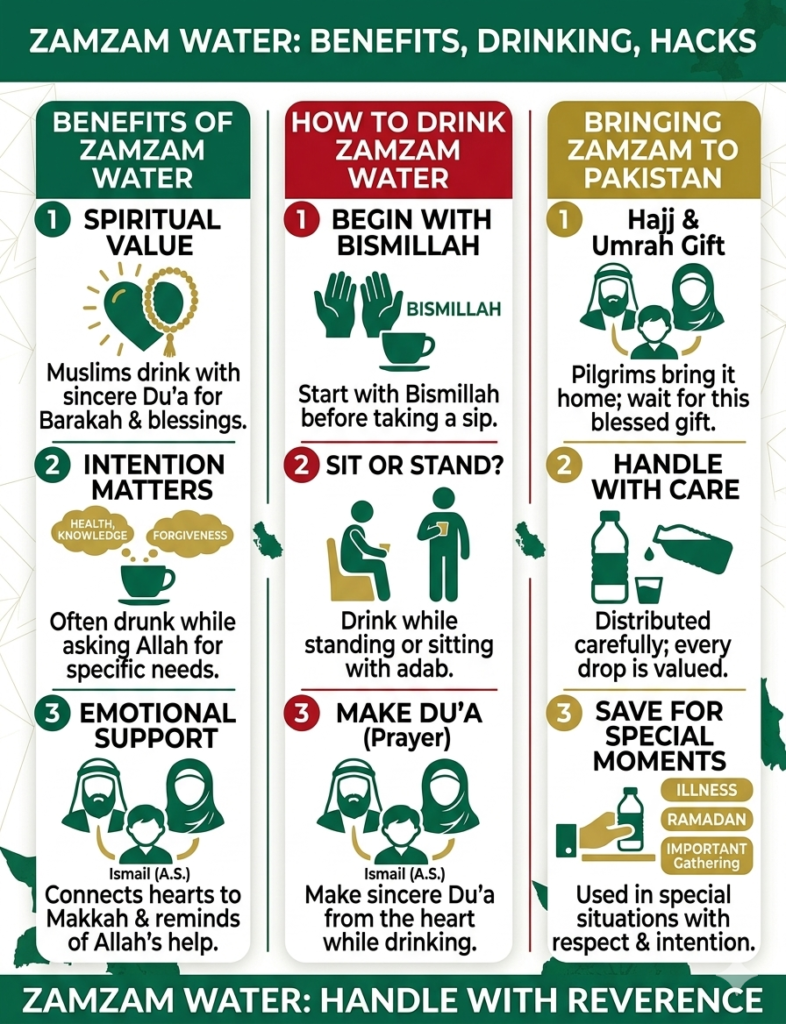
The biggest benefit of Zamzam Water is spiritual. Muslims often drink it while making sincere dua and hoping for blessings. It is associated with barakah, and many believe that drinking it with a good intention carries special benefit. Some drink it for healing. Some drink it before exams and ask Allah for knowledge. Some drink it in illness and ask for shifa. Some drink it after prayer and ask for forgiveness and ease in life.
Its emotional and spiritual effect is powerful. It brings the heart closer to Makkah. It reminds a person of Allah’s help. It creates a moment of reflection in a fast-moving life.
In Pakistani homes, Zamzam Water is often reserved for special moments. Someone may give it to a sick family member. A parent may give it to a child before a major test. It may be offered when a guest returns from Umrah, or shared after a family gathering filled with prayer. This use shows how deeply people trust its blessing.
At the same time, Zamzam Water should not be treated like a superstition or magical product. Muslims respect it because of its Islamic significance. They drink it with faith, humility, and dua, not with empty ritual.
There is a strong sense of adab when drinking Zamzam Water. People try to drink it respectfully and with intention. The act is simple, but the mindset matters.
Many Muslims begin with Bismillah. They drink it while standing or sitting according to what they have learned, and they make dua from the heart. Some recite specific prayers. Others speak to Allah in their own words. That is what makes the moment personal.
In Pakistan, a common scene is this: a small bottle of Zamzam Water is brought from Umrah. The family gathers. The bottle is opened carefully. It is poured into tiny cups because everyone wants to receive some share. No one wastes a drop. Even that small amount is valued. This behavior reflects love, not formality.
The best way to drink Zamzam Water is with respect, gratitude, and sincere intention. That intention gives the act depth.
No discussion about Zamzam Water is complete without Hajj and Umrah. For pilgrims, drinking Zamzam Water is one of the memorable parts of their journey. After tawaf, after prayer, after walking between Safa and Marwah, a sip of Zamzam Water feels different. It does not feel routine. It feels earned, blessed, and unforgettable.
For many Pakistanis, the first direct encounter with Zamzam Water happens only when they go for Umrah or Hajj. Before that, they know it through stories, videos, scholars, and bottles brought by relatives. But when they finally drink it in Makkah, the experience becomes real in a new way. The place, the emotion, the ibadah, the dua, and the moment combine.
This is why people who return from pilgrimage often talk about Zamzam Water with visible emotion. It becomes part of their spiritual memory. It is linked with tears, gratitude, and personal connection with Allah.
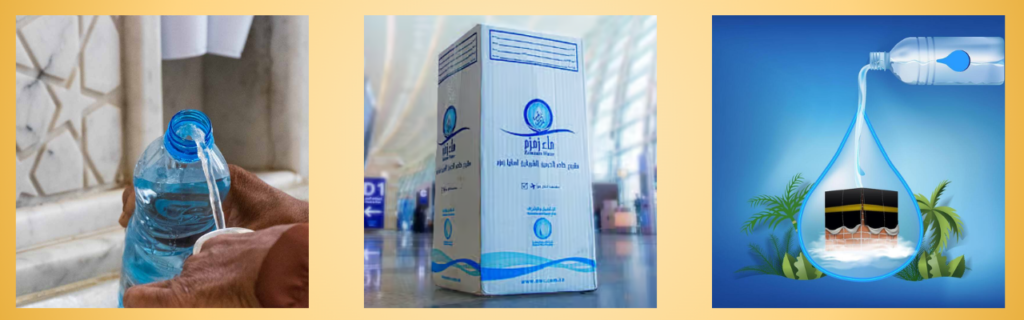
Yes, pilgrims commonly bring Zamzam Water back with them from Saudi Arabia, subject to travel rules and airline handling procedures. In Pakistan, families often wait for this blessed gift from relatives coming back from Hajj or Umrah. It is one of the most expected and respected items brought home.
Because Zamzam Water is precious, people usually distribute it carefully. Some keep a portion for daily use in small amounts. Some save it for illness, Ramadan, important family moments, or for mixing with regular water in a respectful way so more people can benefit from it. This practice is common in many households.
The key point is this: people do not treat Zamzam Water casually. They know it is limited, valuable, and spiritually meaningful. That is why it is handled with care.
No. It is about much more than that. Zamzam Water carries a complete message.
It represents faith under pressure. It represents a mother’s struggle. It represents divine help arriving at the hardest moment. It represents the origin story of a sacred city. It represents continuity, because millions still drink from that blessed source today. It represents connection, because a Muslim in Karachi, Lahore, Islamabad, Multan, Peshawar, or Faisalabad feels emotionally tied to Makkah through it.
In a world flooded with trends, noise, and disposable things, Zamzam Water stands for something pure and lasting. It does not need branding. It does not need hype. Its meaning is already established in the Muslim heart.
Some people talk about Zamzam Water without understanding its place in Islam. That creates confusion. It is important to stay balanced.
Zamzam Water should not be commercialized in a careless way. It should not be treated like a gimmick product. It should not be mixed with fake claims just to attract attention. Respect matters.
It is also wrong to reduce it to a scientific curiosity only. Muslims value Zamzam Water first because of its religious significance. Any discussion that ignores that core point misses the real meaning.
Another misunderstanding is that only large amounts matter. That is not true. Even a small amount is valued. In many homes, a few sips are enough to create a meaningful moment of dua and reflection.
Some topics become historical and fade into the background. Zamzam Water is not one of them. It remains active in Muslim life every day. Pilgrims drink it in Makkah. Families receive it in Pakistan. Children learn its story. Scholars mention its virtue. Sick people are given it with dua. Believers hold onto its symbolism in difficult times.
It still matters because modern life has not reduced the human need for faith, hope, and connection with Allah. In fact, the faster life gets, the more people need reminders of mercy. Zamzam Water delivers that reminder in the simplest form.
It tells every believer that Allah provides. It tells every anxious heart that help can arrive unexpectedly. It tells every struggling person that running between Safa and Marwah was not wasted effort. It tells every Muslim that history is not dead. It lives in practice.
For a Pakistani audience, Zamzam Water is not a distant concept. It is part of everyday religious vocabulary. We hear about it in childhood. We see it when relatives return from Umrah. We watch parents store it carefully. We learn to treat it with adab. We connect it with duas, recovery, blessings, and sacred memories.
That is why content about Zamzam Water must be written with respect and clarity. Readers are not looking for empty words. They want meaningful explanation. They want simple language. They want trust. They want content that answers the search properly and honors the topic.
This is also where strong SEO writing matters. A good article on Zamzam Water should not just repeat the keyword. It should answer real questions, match search intent, and speak in a tone readers trust. It should be useful for Google, helpful for answer engines, and readable for humans. Most importantly, it should feel real.
Zamzam Water is one of the most beloved and meaningful forms of water in Islam. Its value comes from its origin, its miracle, its connection to Makkah, and its place in the heart of every Muslim who understands its story. It is linked to struggle, mercy, worship, dua, and spiritual memory.
For Pakistani families, Zamzam Water often enters the home as a blessing from Hajj or Umrah. It is welcomed with love and passed around with care. That alone tells you everything about its status. People do not guard ordinary water like that. They do not make dua before drinking ordinary water like that. They do not connect ordinary water with sacred longing like that.
Zamzam Water remains powerful because its message remains powerful: when the path looks empty, Allah can still open a source of relief. That truth is timeless. That is why Zamzam Water still matters. That is why Muslims still honor it. That is why every sip feels deeper than water.
Zamzam Water is the blessed water drawn from the well of Zamzam in Makkah near the Holy Kaaba. It holds deep religious importance in Islam.
Zamzam Water is important because it is connected to the miracle granted to Hazrat Hajra علیہا السلام and Hazrat Ismail علیہ السلام, and it remains a sacred part of Hajj and Umrah.
Muslims value Zamzam Water for its spiritual significance, barakah, and the practice of drinking it with sincere dua for healing, guidance, and blessings.
Yes, many pilgrims bring Zamzam Water back to Pakistan after Hajj or Umrah, and families often share it respectfully in small amounts.
It should be used with respect. Many Muslims drink it while making dua and remembering its sacred history.
Yes, for Muslims it is different because of its blessed source, Islamic history, and spiritual importance.
☪ Naat Sharif · Urdu Poetry Mustafa Jan-e-Rehmat Pe Lakhon Salam Meaning, History & Why Every Pakistani Loves…
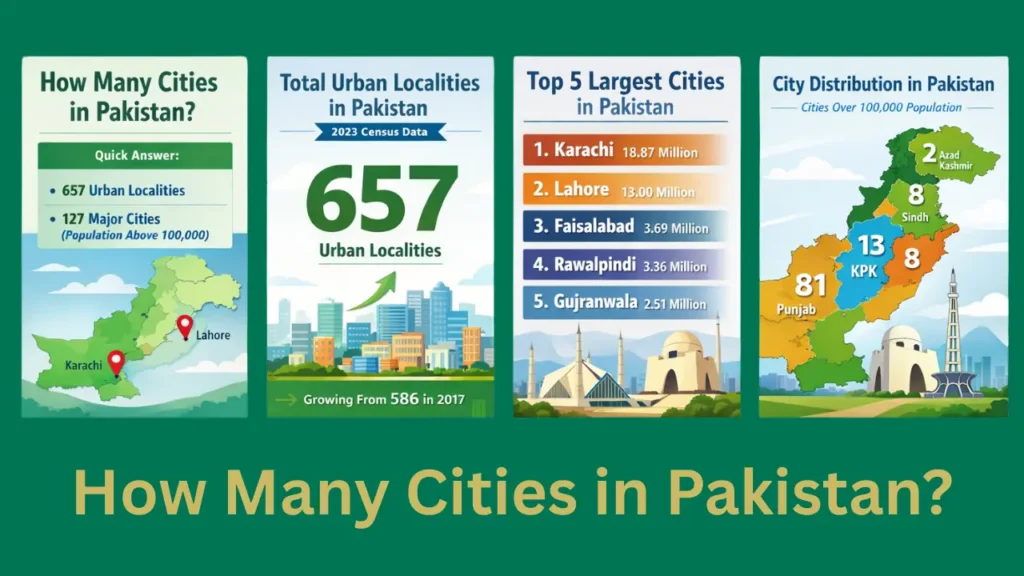
How Many Cities in Pakistan? Quick answer: Pakistan does not have one single city number that everyone uses.…
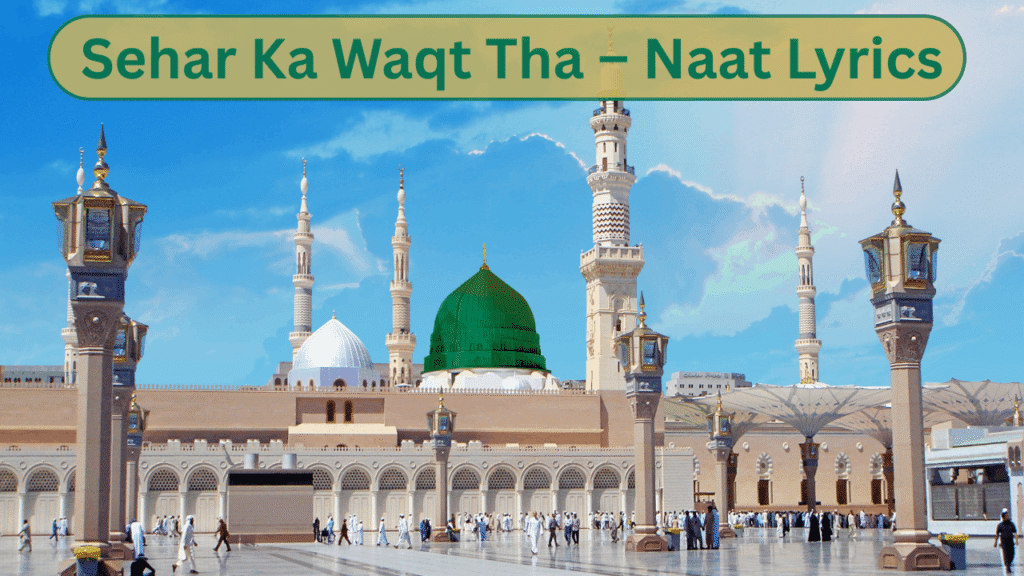
Sehar Ka Waqt Tha Naat Lyrics Sehar ka waqt tha masoom kaliyan muskura rahi thinHawain khair-e-maqdam ke tarane…