Naat Sharif

5 Pillars of Islam

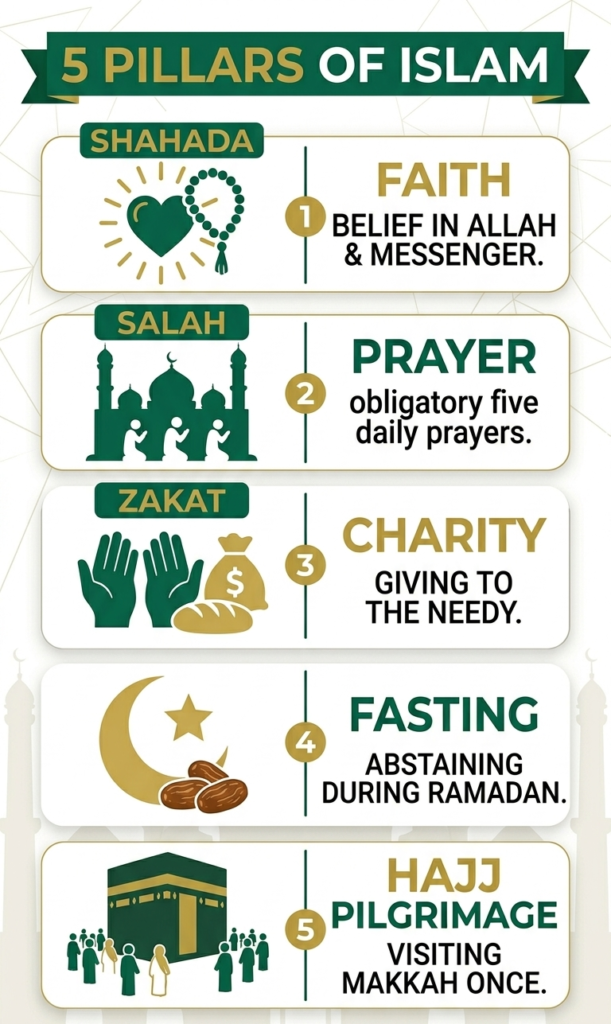
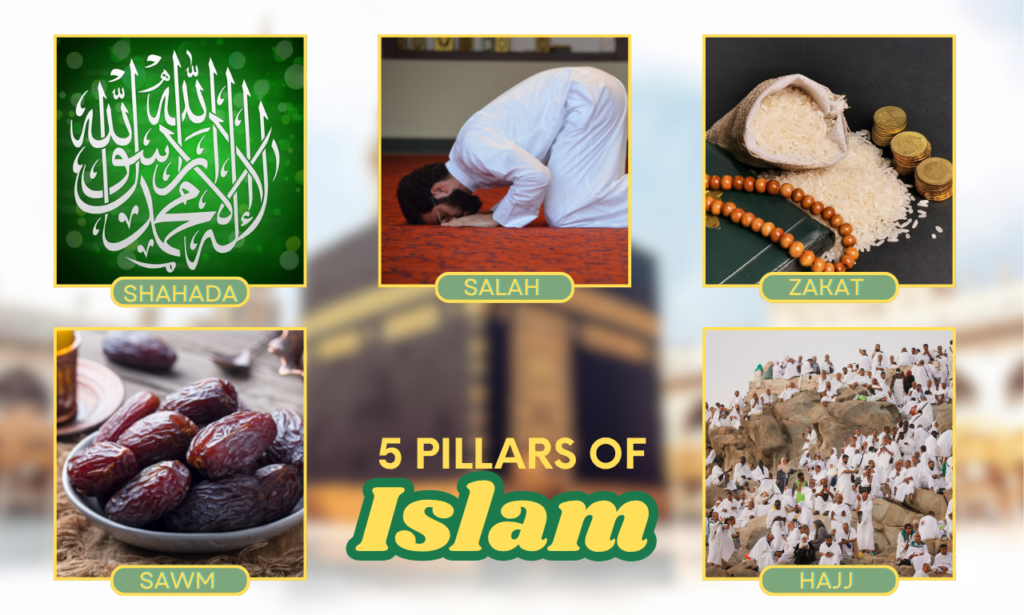
Islam is a beautiful and complete way of life. At its core, Islam is built on 5 important foundations known as the Five Pillars of Islam. These pillars are like a strong base for a house. If the base is strong, the house stands tall. Similarly, these pillars support a Muslim’s faith, actions, and connection with Allah (God). Understanding and following them helps a Muslim live a peaceful, meaningful, and responsible life.


  1. Shahada (Faith)
  2. Salah (Prayer)
  3. Zakat (Charity)
  4. Sawm (Fasting)
  5. Hajj (Pilgrimage)
5 pillers of islam

1. Shahada (Faith)

- Meaning:

Shahada is the declaration of faith. It means saying and believing:
“La ilaha illallah, Muhammadur Rasulullah”
This translates to: “There is no god but Allah, and Muhammad (peace be upon him) is His messenger.”

- Importance:

Shahada is the first pillar because everything in Islam starts with faith. Without belief in Allah and His Prophet (PBUH), other acts of worship lose their meaning.

- Benefits of Shahada:

  • Strengthens your belief in Allah and His guidance.
  • Helps you make good choices in life by following Islamic teachings.
  • Brings peace and purpose to your heart.

- What could happen if ignored:

Ignoring faith can lead to a weak connection with Allah. According to Hadith:

Hadith
"

Whoever says 'La ilaha illallah' and dies believing in it will enter Paradise.

Sahih Bukhari Hadith  ·  Authentic Narration
لَا إِلَهَ إِلَّا اللَّهُ

Belief is the first step to a successful life in this world and the hereafter.

2. Salah (Prayer)

- Meaning:

Salah is the ritual prayer performed five times a day:

  1. Fajr (morning),
  2. Dhuhr (midday),
  3. Asr (afternoon),
  4. Maghrib (sunset), and
  5. Isha (night).

- Importance:

Salah keeps a Muslim connected with Allah throughout the day. It is a reminder to stay humble, thankful, and focused.

- Benefits of Salah:

  • Builds discipline and time management.
  • Brings mental peace and reduces stress.
  • Strengthens community ties when praying in congregation.
  • Reminds you to stay away from sins and do good deeds.

- Consequences of not performing Salah:

Neglecting Salah is a serious matter in Islam. Prophet Muhammad (PBUH) said:

Hadith — Prayer
الصَّلَاةُ عِمَادُ الدِّينِ
"

The first matter that the slave will be brought to account for on the Day of Judgment is the prayer. If it is sound, the rest of his deeds will be sound. And if it is bad, the rest of his deeds will be bad.

Prayer Day of Judgment Deeds Accountability

Salah is not just ritual; it is a daily conversation with Allah that guides you in life.

3. Zakat (Charity)

- Meaning:

Zakat is giving a fixed portion of your wealth to the poor and needy. Usually, it is 2.5% of your savings each year.

- Importance:

Zakat cleanses your wealth and heart. It reminds you that everything you have is from Allah and should be shared with those in need.

- Benefits of Zakat:

  • Helps reduce poverty and inequality.
  • Increases blessings in your wealth.
  • Teaches generosity, empathy, and social responsibility.

- Consequences of not giving Zakat:

Neglecting Zakat is seen as ignoring the rights of the poor. The Prophet (PBUH) warned:

Hadith — Zakat
Third Pillar of Islam
الزَّكَاةُ قَنْطَرَةُ الْإِسْلَامِ
"

Whoever is made wealthy by Allah and does not pay the Zakat of his wealth, then on the Day of Resurrection, his wealth will be made like a bald-headed poisonous snake with two fangs, which will bite him.

A stern warning for those who withhold obligatory Zakat from their wealth.

Giving Zakat purifies both your money and your soul.

4. Sawm (Fasting)

- Meaning:

Sawm is fasting during the holy month of Ramadan. Muslims do not eat, drink, or do bad deeds from dawn to sunset.


- Importance:

Fasting teaches self-control, patience, and gratitude. It reminds Muslims of the struggles of the poor and strengthens spiritual awareness.

- Benefits of Sawm:

  • Builds discipline and self-restraint.
  • Develops empathy for the hungry and less fortunate.
  • Cleanses the mind and heart from bad habits.
  • Brings one closer to Allah through extra prayers and charity.

- Consequences of not fasting:

Skipping fasting without a valid reason is considered sinful. The Prophet (PBUH) said:

Hadith — Fasting
Character & Conduct
مَنْ لَمْ يَدَعْ قَوْلَ الزُّورِ
"

Whoever does not give up false speech and evil actions, Allah has no need that he should give up his food and drink.

Fasting is not merely abstaining from food and drink — it is a complete purification of speech, actions, and character.
Fasting Ramadan False Speech Character Taqwa

Fasting is not only about hunger; it is about controlling desires and improving character.

5. Hajj (Pilgrimage)

- Meaning:

Hajj is the pilgrimage to the holy city of Makkah, Saudi Arabia, which every Muslim who is physically and financially able must perform at least once in their life.

- Importance:

Hajj represents unity, equality, and submission to Allah. Millions of Muslims gather from all over the world, wearing simple clothes, performing rituals, and praying together.

- Benefits of Hajj:

  • Strengthens faith and awareness of Allah’s greatness.
  • Removes sins and gives a fresh spiritual start.
  • Encourages unity among Muslims of different cultures and backgrounds.

- Consequences of neglecting Hajj (if able to perform):

Missing Hajj without a valid reason may be a sin, as the Prophet (PBUH) said:

Hadith — Five Pillars
Foundations of Islam
أُرْكَانُ الْإِسْلَامِ الْخَمْسَة
"

Islam is built on five pillars: Testifying that there is no god but Allah, establishing prayer, giving Zakat, performing Hajj to the House, and fasting Ramadan.

1
Shahada
2
Salah
3
Zakat
4
Hajj
5
Sawm

Performing Hajj is a once-in-a-lifetime opportunity to purify yourself and gain closeness to Allah.

Summary of the 5 Pillars of Islam

The Five Pillars of Islam
Arkaan Al-Islam
Pillar Meaning Main Benefit Consequence of Ignoring Hadith Reference
1
Shahada
Declaration of faith Faith and purpose in life Weak connection with Allah Sahih Bukhari
2
Salah
Daily prayer Peace, discipline, guidance Deeds lose value At-Tabarani
3
Zakat
Charity for the poor Purifies wealth and soul Wealth becomes a punishment Sahih Muslim
4
Sawm
Fasting in Ramadan Patience, self-control, empathy Sinful if neglected Sahih Bukhari
5
Hajj
Pilgrimage to Makkah Spiritual cleansing, unity Missing obligation if able Sahih Bukhari

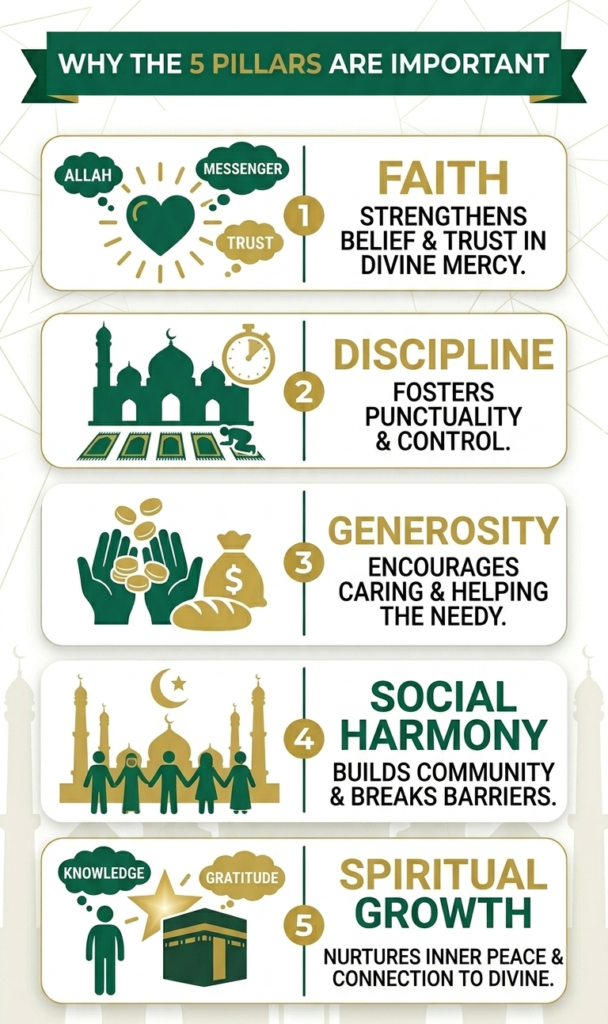
Why the 5 Pillars Are Important for Everyone

The 5 Pillars of Islam are not just rules; they are guidance for a balanced, peaceful, and meaningful life. They teach:

  • Discipline: By following Salah and Sawm.
  • Generosity: Through Zakat and helping others.
  • Faith: Strengthened by Shahada and Hajj.
  • Social harmony: Connecting with family, friends, and community.
  • Spiritual growth: Closer connection with Allah in every step.


Even children can learn the importance of prayer and honesty. Adults can find purpose and balance. Educated and non-educated people alike can follow these simple, clear steps to improve life on earth and prepare for the hereafter.

Final Thoughts

The 5 Pillars of Islam are simple yet powerful. They guide a Muslim in faith, actions, and daily life. Ignoring them may lead to spiritual weakness and missed blessings, while following them brings peace, purpose, and rewards both in this life and the next.

Whether you are young, old, rich, or poor, the Five Pillars are for everyone. Start learning, practicing, and sharing their importance. Remember, Islam is easy to understand and live—it only asks for faith, sincerity, and commitment.

Sincerity & Faith
Promise of Mercy
رَحْمَةُ اللَّهِ وَهِدَايَتُهُ
"

Whoever performs these pillars with sincerity and faith will find Allah's mercy and guidance throughout life.

Sincerity Pure intention in every act of worship
Faith Firm belief in Allah and His commands
Reward Mercy and guidance throughout life

Other Post

Zamzam Water

Zamzam Water

Zamzam Water Zamzam Water is not ordinary water. For Muslims, it carries history, emotion, faith, and deep spiritual…

Mustafa Jan E Rehmat Naat Lyrics

Mustafa Jan E Rehmat Naat Lyrics

☪ Naat Sharif  ·  Urdu Poetry Mustafa Jan-e-Rehmat Pe Lakhon Salam Meaning, History & Why Every Pakistani Loves…
Mufti Taqi Usmani

Mufti Taqi Usmani

Mufti Taqi Usmani – Full Biography Mufti Muhammad Taqi Usmani is among the most influential Islamic scholars, jurists,…